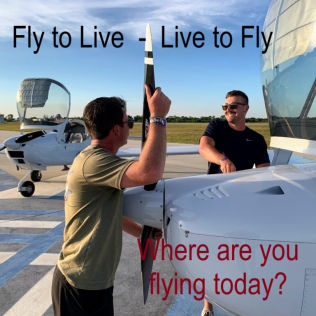
MST often receives questions about “How to become an airline pilot.” To help, we’ve outlined the general pathway below. Keep in mind that both the cost and duration vary significantly depending on the country and the chosen training school. Importantly, a higher price does not always guarantee better training quality.
Becoming an airline pilot requires obtaining a series of licenses and ratings, building sufficient flight hours, and meeting medical and educational requirements. The typical progression involves earning a Private Pilot License (PPL), an Instrument Rating, a Commercial Pilot License (CPL), and ultimately an Airline Transport Pilot License (ATPL).
• Private Pilot Familiarization
• Instrument Flying Familiarization
• MST Reference Documents
• Learn to Fly using Flight Sim
> How to become an airline pilot
Rev: 820252
• Decide if you want to fly for fun, for hire, or for an airline.
• Determine the type of aircraft you want to fly (single-engine, multi-engine, etc.).
• Medical Certificate:
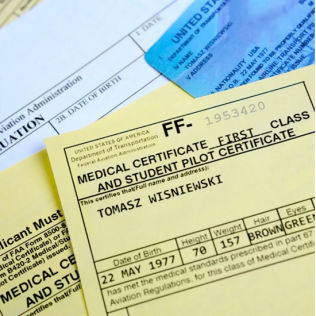
Obtain a First Class Medical Certificate from an Aviation Medical Examiner, as this is required for airline pilots.
• Educational Requirements:
A diploma or equivalent is generally required, but a degree can be beneficial, especially for major airlines.
• This is the first step for any pilot, allowing you to fly for recreation.
• You'll need to complete ground school, flight training, and pass both written and practical exams.
• Instrument Rating:
This allows you to fly in various weather conditions using instruments.
• Commercial Pilot License (CPL):
This license is required to fly for hire, and it involves more advanced training and flight hours.
• Multi-Engine Rating:
This allows you to fly multi-engine aircraft, which are commonly used by airlines.
• Build Flight Hours:
You'll need to accumulate a significant number of flight hours to meet the requirements for the ATPL, often through commercial flying or becoming a flight instructor.
• This is the highest level of pilot certification and is necessary to fly for airlines.
• It requires extensive flight experience and passing both written and practical exams.
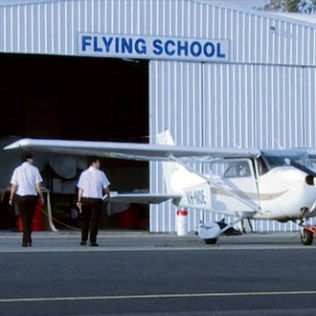
• Research reputable flight schools and instructors to ensure quality training.
• Consider factors like location, cost, and training methods.
• Building flight hours by teaching can be a great way to gain experience and potentially work out deals with flight schools to have your certificates paid for.
• Attend aviation events, network with other pilots, and research job opportunities.
• Apply for positions with regional airlines to gain experience and build towards a major airline.
• Aviation is a constantly evolving field, so it's important to stay up-to-date on regulations, procedures, and technologies.
• Consider further training and upgrades as you progress in your career.
Becoming an airline pilot is demanding, expensive and time consuming. As you can imagine the role of an airline pilot is a safety critical role, so you will have to undertake an extremely difficult and comprehensive training course to ensure that you are fully qualified to fly commercial airliners, responsible for the safety of the crew and passengers and the competence to take control of an expensive aircraft. Regardless of the difficulty, this is no reason to be put off. As once you have achieved your goal the benefits and salary are excellent. Also, having the opportunity to travel to different parts of the world and be paid for it at the same time, will be extremely appealing to many of us.
To be eligible to fly airliners for a commercial airline, you will need to hold an ATPL (Airline Transport Pilot License). However, getting to this stage will take a considerate amount of commitment and funding, as pilot training is costly.
To be considered for pilot training you will be required to have at A Levels, but a degree can be beneficial, especially for major airlines. English, Maths and physics are desirable subjects, as the training requires a good level of understanding in these.
There are a number of routes for training you can take which include the following:
- Integrated training – This is a full-time course which takes about 18+ months to complete and is a mixture of classroom-based tuition and flying time in the cockpit. This is the most expensive route and will cost the most.
- You can also take what is call Modular training which allows you to take the same course, but in smaller chunks, more of a pay as you go model. Although more affordable, the cost is still considerate and will also involve more studying at home, potentially this route could take longer depending on your personal circumstances, especially if you are working to fund the training. This route could also require you to already have a PPL (Private Pilot’s License) so please check with the course provider first.
- In some circumstances you may be fortunate to receive partial or full sponsorship from an airline to fund your training. However, as you can imagine the competition for spaces would be fierce, so you would have to prepare comprehensively to be successful with this entrance. Also, the number of places depends on how well the industry is performing and how busy the airlines are. Based on growth in international travel, there is a much better scope currently. It is certainly worth checking airline company websites for information on any opportunities and what their eligibility criteria is.
Before applying for any course, there is one thing you should most definitely consider. All commercial pilots will be required to pass a class one Civil Aviation Authority (CAA) medical. If you are unable to pass this medical, you will not be eligible for the ATPL, regardless on how well you do in the training.
What are the steps required to become a commercial pilot?
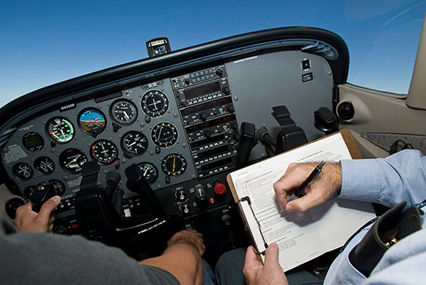
Becoming a commercial pilot is a structured process that involves several key steps, each designed to build your skills and experience as you progress toward a professional pilot career. The journey begins with flight training and earning a private pilot certificate, which introduces you to the fundamentals of flying and aviation safety. As you gain flight hours and experience, you’ll move on to more advanced training, including obtaining a commercial pilot certificate. Accumulating sufficient flying hours is essential to qualify for airline pilot positions, and many aspiring pilots build these hours by working as flight instructors. This certification allows you to be compensated for your flying and opens the door to a variety of career opportunities in aviation. Throughout your training, you’ll work with experienced instructors, log valuable flight hours, and use a simulator to practice flight procedures and emergency scenarios in a controlled environment, helping you develop the knowledge and skills needed to become a successful commercial pilot.
What is a Private Pilot License?
A Private Pilot License (PPL) is the most sought-after type of pilot certification. It is actually called a Private Pilot Certificate and is similar to a driver's license for automobiles, as both are government-issued licenses granting legal permission to operate a vehicle or aircraft. A pilot's license is the certification required to legally operate an aircraft. In Sri Lanka Civil Aviation Authority sets the requirements for obtaining a private pilot license.
By earning a private pilot license, you can legally fly an aircraft for personal and non-commercial purposes. Private pilots are trained to navigate small aircraft by themselves. Flight training includes aircraft maneuvers, navigation, emergency procedures and cross-country flight planning. While people may seek the license for hobby or sport reasons, a private pilot certification is the first major milestone on the road to becoming an airline pilot.
What is a Commercial Pilot License?
A commercial pilot license, or certificate, is a type of pilot license that allows someone to operate an aircraft for compensation (salary).
Privileges
A licensed commercial pilot may act as pilot-in-command of an aircraft for compensation or hire, as well as carry persons or cargo for compensation or hire. To put another way, holding a commercial pilot license means you are legally allowed to get paid as a pilot.
What does a Commercial Pilot do?
Commercial pilots are paid to fly as a pilot, transporting cargo and passengers, as well as perform other operations such as aerial surveying and search & rescue, etc.
What is the Difference between Commercial Pilots and Airline Pilots?
Airline pilots operate regularly scheduled passenger flights. To fly as an airline pilot, you must have an Airline Transport Pilot License (ATPL) certificate, which is the highest pilot license the CAA issues. However, all pilots must first start by earning their Private Pilot License and then their Commercial Pilot License, before they can obtain an ATPL certificate.
How to Become a Certificated Flight Instructor (CFI)
As you progress through your aviation career, you may consider earning your flight instructor certification. As a certificated flight instructor, you can build flight experience quickly to meet airline and corporate hiring minimums. Being a certificated flight instructor is a challenging and rewarding career that utilizes all you have learned during your own flight training. Flight instructors aim to be role models of the aviation community, sharing knowledge and experience with their students, and for many people it is the first job in aviation that earns them a paycheck.
Why Should I Become a Certificated Flight Instructor?
There are many reasons why pilots choose to become a CFI, with the most common reason being to gain experience and build flight time. Most jobs in aviation, especially commercial airline pilot jobs, require a certain amount of flight time to be eligible. Many candidates opt to teach flight training to students due to the fast-paced environment and the opportunity for steady gains in flight time hours. By teaching students how to safely and effectively operate aircraft, flight instructing also reinforces the knowledge you gained during your own flight training. Over time, flight instructors become very knowledgeable, skillfully polished pilots that are also privileged to train and endorse other pilots to take CAA practical tests.
How Long Does It Take to Earn a Flight Instructor Certificate?
While there is no specific time requirement to become a flight instructor, all flight instructors must obtain at least a Commercial Pilot License as part of their eligibility requirements. The commercial pilot license requires 250 hours of flight time as a pilot, with several associated sub-requirements. A pilot who plans to become a flight instructor is essentially preparing for the role from the first day they begin flight training, meeting the demands of each rating (essentially a milestone) along the way.
What Are the Different Types of Flight Instructor Certifications?
Further milestones may be met within the category of flight instructor, earning you different types of certifications:
• Certificated Flight Instructor (CFI): A flight instructor for single-engine aircraft
• Certificated Flight Instructor – Instrument (CFII): A flight instructor that teaches instrument flying
• Multi-Engine Instructor (MEI): A flight instructor for multi-engine aircraft
What Is an ATPL Certificate?
The Airline Transport Pilot License (ATPL) certificate is the highest level of pilot certification issued by the CAA. It is the final milestone for most pilots before starting a career with an airline. While a Commercial Pilot Certificate allows a pilot to be paid for flying, the ATP certificate is required for most professional pilot jobs and is often listed as a minimum qualification for airline positions.
Why Get an ATPL Certificate?
Pilots who hold an ATPL certificate meet the hiring minimums for most regional airlines and are eligible to serve as captains or first officers. Beyond airline jobs, the ATPL certification opens additional career opportunities with corporate and charter operators. ATP-certified pilots can also instruct other pilots in air transportation service and make logbook endorsements, provided they hold ratings in the appropriate category, class, and type.
“Type” refers to a type rating, which is specialized training required to act as pilot-in-command of aircraft over 12,500 pounds maximum takeoff weight or any turbojet aircraft, regardless of weight. Type ratings are typically earned after the initial ATPL certificate and are often tied to the specific aircraft a pilot will operate professionally.
What Is the ATPL CTP?
Pilots applying for an ATP certificate with a multi-engine rating or in combination with a type rating must complete the Airline Transport Pilot Certification Training Program (ATPL CTP) before taking the ATPL knowledge test.
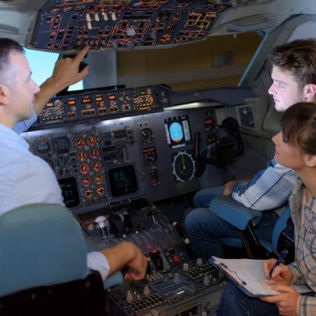
The ATPL CTP course typically includes 30 hours of ground school instruction in subjects such as aerodynamics, meteorology, and air carrier operations, as well as 10 hours of simulator time. For many pilots, it is their first exposure to full-motion, airline-oriented simulators. After completing the course, candidates must pass the ATPL knowledge test before moving on to the practical check ride.
How Long Does It Take to Earn an ATPL Certificate?
The timeline to earn an ATPL certificate varies depending on a pilot’s starting point and training path. For someone beginning with no flight experience, completing the required training and experience can take two and a half years, or more. This includes time spent earning private, instrument, and commercial ratings, building flight experience—often as a flight instructor—and completing the ATPL CTP course and exams.
Although the requirements may seem extensive, they are typically met through a structured progression over time. Staying focused on each milestone—certificates, ratings, experience—positions pilots to achieve ATPL certification and advance into the most competitive aviation careers.
Multi Engine Rating: Requirements, Training, and Pilot License
A Multi Engine Rating is a pilot rating that qualifies you to fly as pilot-in-command (PIC) of any aircraft with more than one engine. It is a necessary pilot certification add-on for any aspiring pilot to advance to the airlines, or to increase their overall marketability in the aviation workforce.
Why Should I Get My Multi Engine Rating?
There are several reasons why a pilot might want to earn a multi engine rating:
• Pilot career advancement — required to fly for most commercial airline jobs
• You're qualified to fly bigger, faster aircraft with greater range
• Enjoy the inherent safety of having a second engine in the event of an engine failure
• Learn to Fly Complex Aircraft
For all candidates, even those that already hold a pilot certificate, the multi-engine aircraft is the first exposure to performing their duties in a complex aircraft. Complex aircraft implies the aircraft has retractable landing gear, flaps, and a controllable pitch propeller. These systems can present new procedural challenges and understanding of new systems to a candidate, in addition to new concepts such as multi engine aerodynamics, rules governing certification of multi engine aircraft, and unique engine failure scenarios, including actually shutting an engine down in flight.
What Are the Requirements For a Multi Engine Rating?
If you’ve already obtained a private pilot certificate, the multi engine rating becomes what is known as an “add-on” rating. Since the candidate has already accomplished many of the tasks required for a pilot certificate and fulfilled the aeronautical experience requirements, earning the rating becomes a matter of learning the differences, understanding a new airplane, and proving proficiency to a pilot examiner. In an accelerated program, this can be completed in as few as a couple weeks.
Required for a multi engine rating:
• Earn the required endorsements from an authorized instructor
• Take and pass a checkride with a pilot examiner to act as PIC of a multi engine aircraft
Not required to earn a multi engine rating:
• No requirement for a knowledge test (when the multi engine rating is conducted as an add-on)
• No minimum flight time requirement (however you can expect to need 10 to 15 hours in the multi engine airplane before receiving endorsements from an instructor)
If the candidate has never earned a previous pilot certificate, the requirements must be met for a private pilot certificate, although the multi engine aircraft may be used for all training.
Multi Engine Rating Medical Requirements
Medical requirements also remain the same as for the private pilot license and can be operated under any class of medical certificate.
TYPES OF PILOT TESTS (Checkrides)
What Tests Do You Take to Become a Pilot?
The road to becoming a pilot is enjoyable and challenging. Potential pilots should expect a series of evaluations for every step along their road to success. These evaluations will come in the form of written tests, computer-based knowledge tests, oral evaluations, and practical exams. Some evaluations are informal, while others are formal tests with a CAA examiner. Regardless of formality, all evaluations should be taken seriously, as they are a direct reflection of your commitment to studying and becoming a safe pilot, as well as your instructor’s commitment to you.
Stage Check or Evaluation
Depending on your program you may have a series of stage checks. Stage checks are evaluations during training to establish your level of progress and what needs work leading up to the final oral and practical test for each rating. They are informal by design and not taken with the CAA, but you may not be able to move forward without demonstrating you have met each milestone in that portion of training. An example of where you might find a stage check is prior to being allowed to fly an airplane for the first time by yourself, or about mid-way through the instrument training to determine you are progressing as you should. You will often find stage checks during each rating you undertake, and they should be constructive for both you and your instructor to formulate a plan to success as you complete the rating.
CAA Private Pilot Test
The first mandatory evaluation is found in the private pilot license stage. While still informal, the CAA mandates that all student pilots are given a pre-solo knowledge test prior to their first solo. Usually given in written form, the pre-solo knowledge test will focus on aeronautical knowledge that should be known by the student pilot prior to flying the aircraft solo. Aircraft systems, flight characteristics, performance limitations, regulations, weather, traffic pattern operations, and airport diversions, among other topics, may be the focus of the pre-solo knowledge test. Instructors will review all incorrect answers with the student upon completion. While there is no guidance about passing or failing, the instructor will determine if they want to authorize the student for solo or if more training is necessary. Instructors should ensure sufficient training is provided to the student before administering the test.
Pilot Knowledge Test
The private, instrument, commercial, flight instructor, instrument flight instructor, and airline transport pilot ratings all include a formal knowledge test that must be completed prior to conducting the practical exam for the given certificate. Some flight schools have their own testing center, while others may require candidates locate a testing center in their area. Often called "writtens", these tests will focus on aeronautical knowledge and skills necessary for their respective rating, and no notes are allowed. In some cases, a standalone flight computer or calculator may be used, but phones and tablets are not allowed in the testing room. A score of 80% or higher is needed to pass the test. Although not required, students that complete a home-study course focused on the specific written test generally produce better scores. Most home-study courses include practice tests that can be taken once the study material is completed.
Practical Test (Checkride)
The hard work for each rating culminates in a final practical test with an CAA designated examiner, commonly known as a checkride. The checkride is two parts, composed of an oral evaluation and a flight evaluation in the airplane. The oral portion is usually conducted in a private office or classroom where you and the examiner will discuss the expectations of the test, possible outcomes, a plan of action corresponding with the Certification Standards for the given rating, and of course the examiner will accept payment for their services. The examiner will question the applicant on areas of knowledge necessary for the rating (outlined in the CAA Certification Standards - CS) and will incorporate scenario-based questioning when able. If the examiner determines the candidate’s knowledge was satisfactory on the oral portion, they will head to the aircraft to complete the practical portion of the exam.
In the practical flight portion of the exam, the examiner will evaluate the candidate through every step, from the preflight inspection to the post-flight inspection. During the flight, the candidate will demonstrate they can operate the aircraft safely and within the standards outlined in the CS. The examiner will ask the candidate to demonstrate proficiency in all applicable areas for the rating.
- For example, during the private pilot practical exam, candidates will demonstrate a series of different takeoffs and landings, maneuvers, cross-country flight planning and navigation, dealing with emergencies, and diversions.
- During the instrument phase the candidate will demonstrate proficiency in navigating by use of instruments, holding patterns, a series of different instrument approaches, and cockpit management.
- The commercial phase consists of several takeoffs, landings, and maneuvers found in the private stage, but to tighter tolerances, as well as a few new maneuvers. The CS should be referred to for specific guidance on necessary tasks for each rating.
Upon completion of a satisfactory practical exam, the examiner will issue a temporary certificate to the pilot allowing them to exercise the privileges of their new rating. The entire process can take from a couple hours to half the day and signifies your hard work and dedication when completed successfully. The practical test can be extremely stressful but with diligence and sufficient preparation the entire occasion can be enlightening and exciting.
Starting with zero experience, it takes two and a half years plus to become an airline pilot. It will take you twelve months to complete pilot training, then another 18+ months to gain additional flight time and meet airline hiring requirements of 1,500 hours.
Yes, you can become an airline pilot without a degree. Airlines are facing a shortage of pilots and no longer require pilots to have a four-year degree. While a degree may help set you apart from similar qualified pilots, airlines have no preference on field of study.
Becoming an airline pilot involves significant costs, typically ranging from $80,000 to $150,000 or more, depending on the training path and location. These costs cover various licenses, ratings, and training hours, with potential variations due to factors like fuel prices, aircraft type, and school choice.
Factors Influencing the Cost:
• Training Path:
Integrated programs (faster, more structured) can be more expensive than modular training (taking each license and rating separately).
• School Choice:
Different flight schools have varying tuition fees and hourly rates for flight instruction.
• Aircraft Type:
Flying more advanced aircraft or those requiring specific training (e.g., multi-engine) can increase costs.
• Location:
Training in areas with lower operational costs or where scholarships are available can reduce the overall expense.
• Hidden Costs:
Commuting, accommodation, and potential loss of income during training should also be considered.
Breakdown of Costs (Approximate):
• Private Pilot License (PPL): $15,000 - $20,000
• Commercial Pilot License (CPL): $55,000 and up (potentially six figures)
• Instrument Rating: $12,000 - $15,000 (including ground and simulator training)
• Multi-Engine Rating: $5,000 or more
• Flight Instructor Rating: $5,000
• ATPL Theory (for some programs): $3,000 - $8,000
• Hour Building: $15,000 - $30,000 (depending on the number of hours)
Example: A program like Zero Time to Airline might cost $105,000, including all necessary ratings and certificates. If starting with a PPL, the cost could be around $83,000, according to Thrust Flight.
You can hold a commercial pilot certificate as young as 18 years old, but most airlines require applicants be at least 21 years old, which is a prerequisite for the Airline Transport Pilot License certificate.
There is no maximum age for becoming an airline pilot. However, please bear in mind that the mandatory retirement age for airline pilots is 65. This is enforced by the Civil Aviation Authority and must be adhered to. So, considering the cost and the length of the training, this should be a career you consider from your late twenties or thirties. Possibly, something you would not want to consider approaching your twilight years of your working life.
No, as long as your vision can be corrected to 20/20 with glasses or contacts, you are eligible for a First-Class Medical Certificate, which makes you eligible to fly as a civilian professional pilot. This is much less restrictive than military pilot vision requirements.
What if I’m Colorblind?
A Medical can be obtained by some people with colorblindness. The restrictions will depend on the degree of colorblindness. There are several mechanisms for making this determination. Consult an Aero Medical Examiner (AME) for more information. Some airlines have their own restrictions more stringent than others.
1
The first step to become a private or commercial pilot is to research your flight training options. Learn and compare available programs offered by flight schools, and pick the best match for your aviation goals. Choosing the right course is crucial for achieving your aviation career goals efficiently.
2
An Admissions Flight, also called a discovery flight, is an introductory flight lesson that will allow you to compare flight schools and training programs. During your flight, you will experience first-hand the training, aircraft, and quality of instruction a flight school will offer you. It is also a great way to get a better sense of what it's like to fly from behind the controls.
3
Pilots must meet basic medical requirements to fly. If you want to fly professionally, you must meet higher medical standards than recreational pilots and should apply for a first-class medical certificate through an Aeromedical Examiner (AME).
4
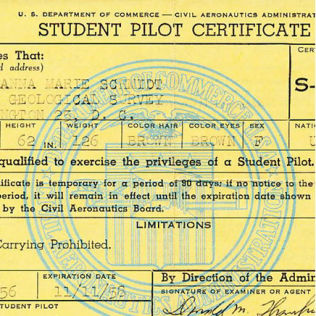
Apply for a student pilot certificate through your school, your flight instructor can help with this. While you don't need a student pilot certificate to start flying lessons, you will need it to fly solo during your training.
5
Start taking flight training lessons and begin working towards obtaining the aeronautical knowledge and pilot training experience requirements needed to become a private pilot. Accumulating flight hours is a crucial part of the training process. Intensive training can also help you learn faster and more efficiently.
6
During your private pilot flight training, you will need to take and pass the private pilot knowledge test. To be eligible for the test, you must receive an endorsement from your flight instructor. Ground school plays a vital role in preparing for the test.
Pass Private Pilot Practical Exam
7
The final step in earning your private pilot certificate is to take a practical exam with a Designated Pilot Examiner. This exam consists of both an oral and a flight portion, and once completed you will be a private pilot.
***
When all the calculations show it can’t work, there’s only one thing to do: make it work. The most beautiful dream that has haunted the heart of humans since Icarus, Flying!